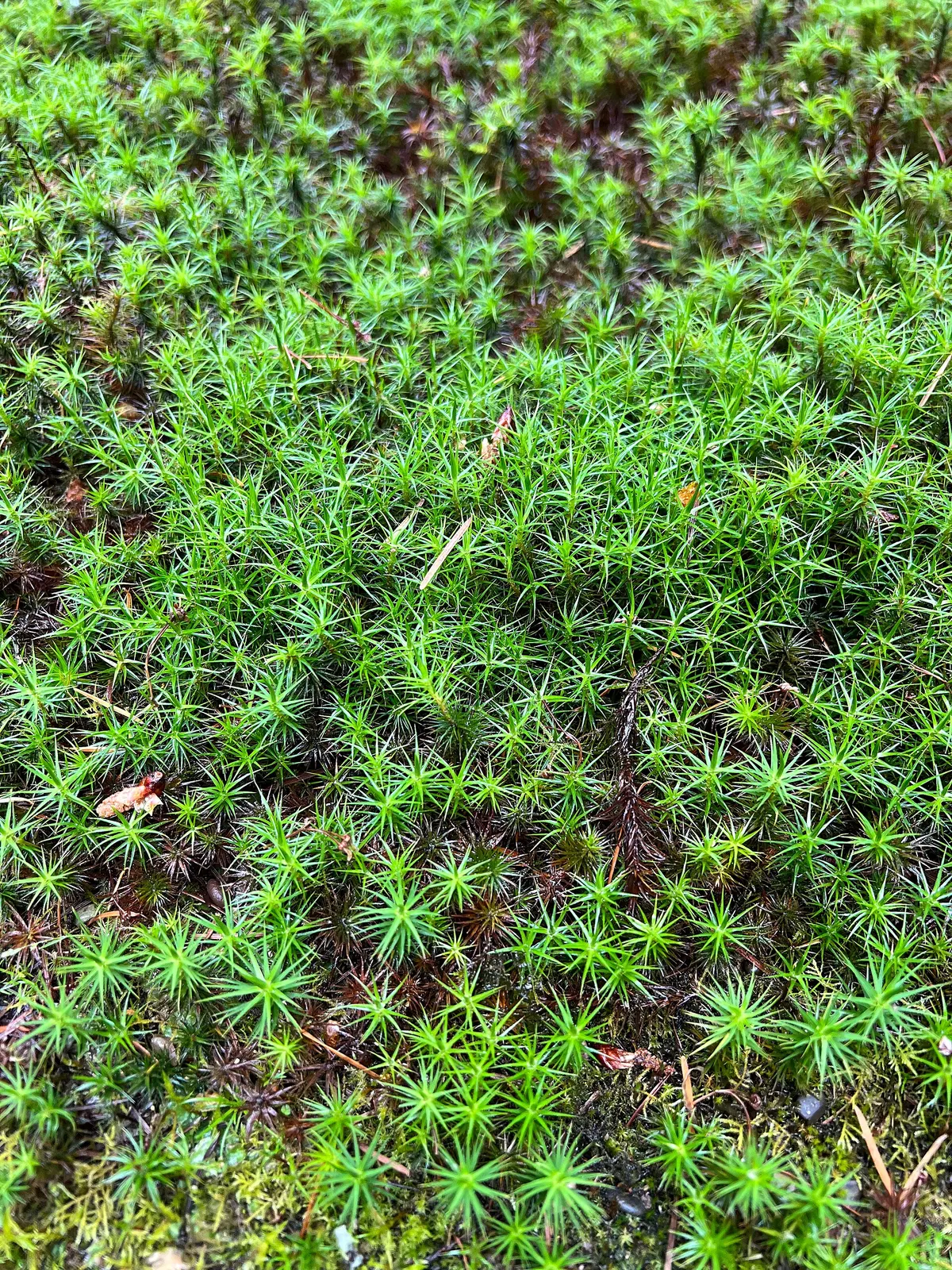
A moss treatment can change a lawn's appearance without changing why moss prospered. Mild, wet winters make this a familiar west-side problem. The long-term decision is whether to improve conditions for grass, accept some moss, or redesign a difficult corner.
- Identify shade, persistent wetness and weak turf before selecting a treatment.
- Test soil before buying lime; lime is not a moss killer.
- Any removal plan needs a follow-up plan for exposed soil.
Map the conditions that favor moss
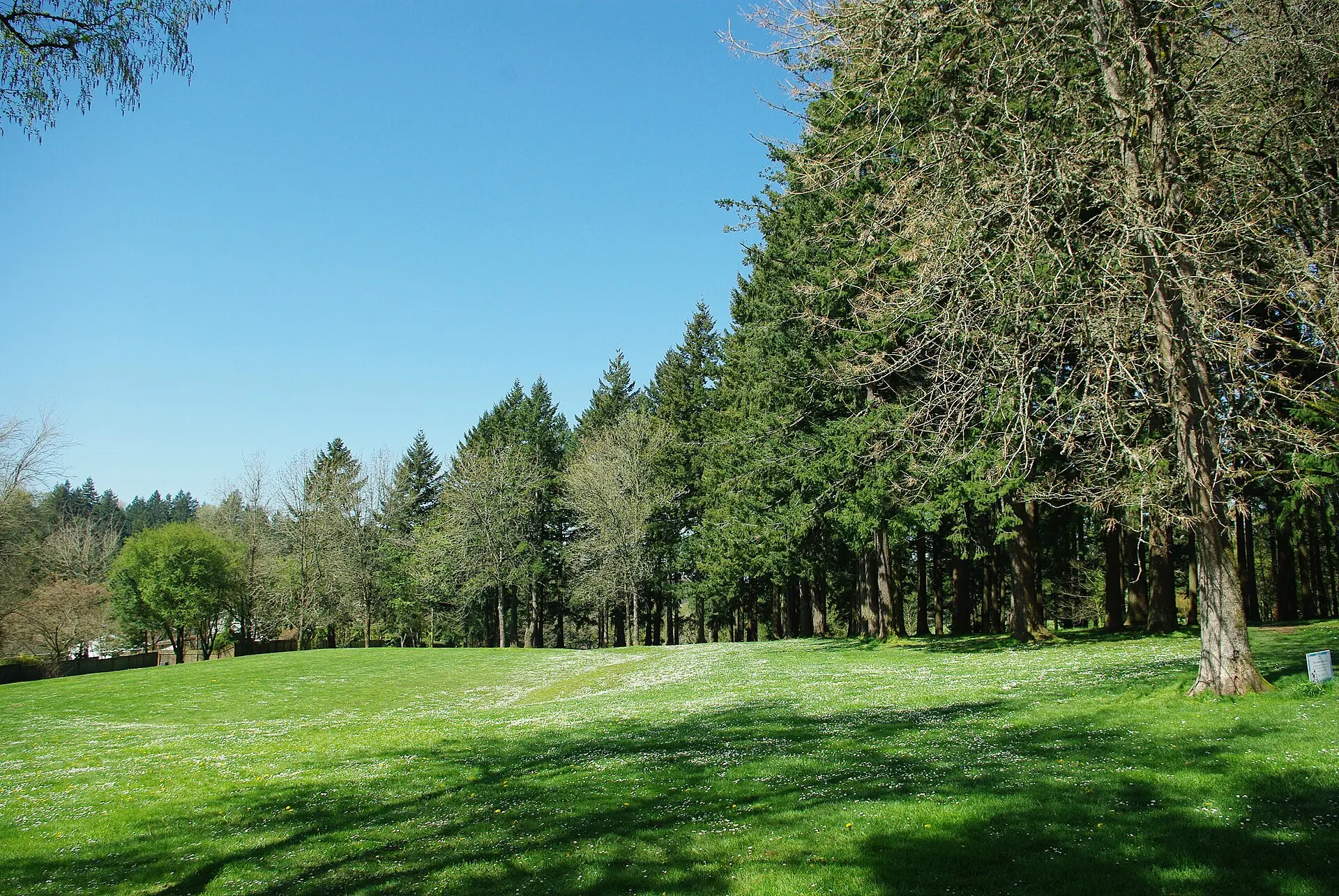
Look at where moss stops. Its boundary may follow a tree canopy, a low spot, a fence shadow or a mower-scalped rise. Take a photo after rain and another during a dry spell. Check whether irrigation keeps a shady area wet after the rest of the lawn has dried.
Western Oregon's moss often grows strongly between autumn rains and early spring, when turf growth is limited. Coastal yards can share those conditions, while a shaded irrigated interior patch can also support moss. The presence of moss alone does not prove an acidic soil or a single nutrient deficiency.
Choose the outcome for that patch
For a grassy play area, improve the grass's growing conditions: use a suitable mowing height, reduce unnecessary irrigation, investigate compaction and correct demonstrated nutrient or pH needs. A seed mix needs enough light and air movement. Even a shade-tolerant mix has limits in wet, dark conditions.
A decorative edge can have a different goal. Keeping moss in a lightly used, appropriate place may be more practical than repeatedly forcing grass to grow. Discuss changes beneath established trees with an arborist rather than cutting roots, raising soil over them or heavily pruning a canopy simply to rescue a small lawn strip.
Remove carefully and rebuild cover
For the pesticide-free route, remove loose moss by raking when soil is workable and plan suitable overseeding during a growing window. Inspect what remains before making repeated mechanical passes. Bare ground left through winter can invite more moss and weeds.
If you choose a moss-control product, use one specifically labeled for lawns and follow its application, watering, surface-protection and re-entry instructions. Roof products are not interchangeable with lawn products. Iron-based treatments can stain adjacent hard surfaces; product labels determine precautions. A treatment can suppress moss, but cannot supply sunlight or repair ponding. Evaluate the patch over the next wet season, using the same photo position rather than judging only the immediate color change.
Questions that come up
Will adding lime remove moss?
No. Lime can correct a demonstrated pH need, but it does not directly solve the mix of moisture, shade and weak turf that often favors moss.
Can I use roof moss treatment on the lawn?
Use only a product whose label explicitly permits the intended lawn use. Different products have different ingredients, concentrations and site instructions.
Sources & further reading
Independent guidance, with regional extension and primary references. The linked product label and local conditions take priority over a generic schedule.
- Managing moss in lawns in Western OregonOregon State University Extension
- A Guide to Collecting Soil Samples for Farms and GardensOregon State University Extension
- Lawns and lawn alternativesMetro, Portland regional government