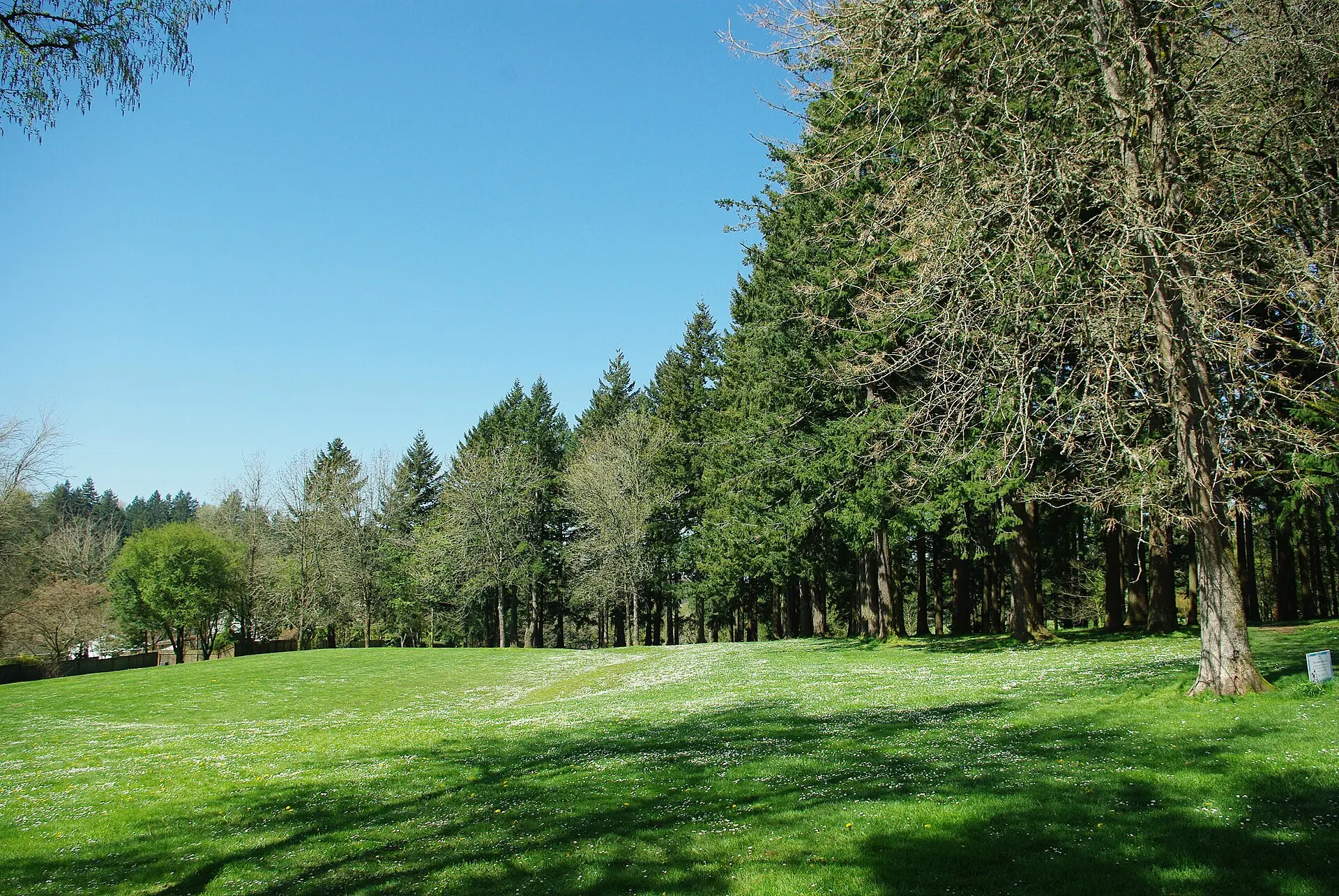
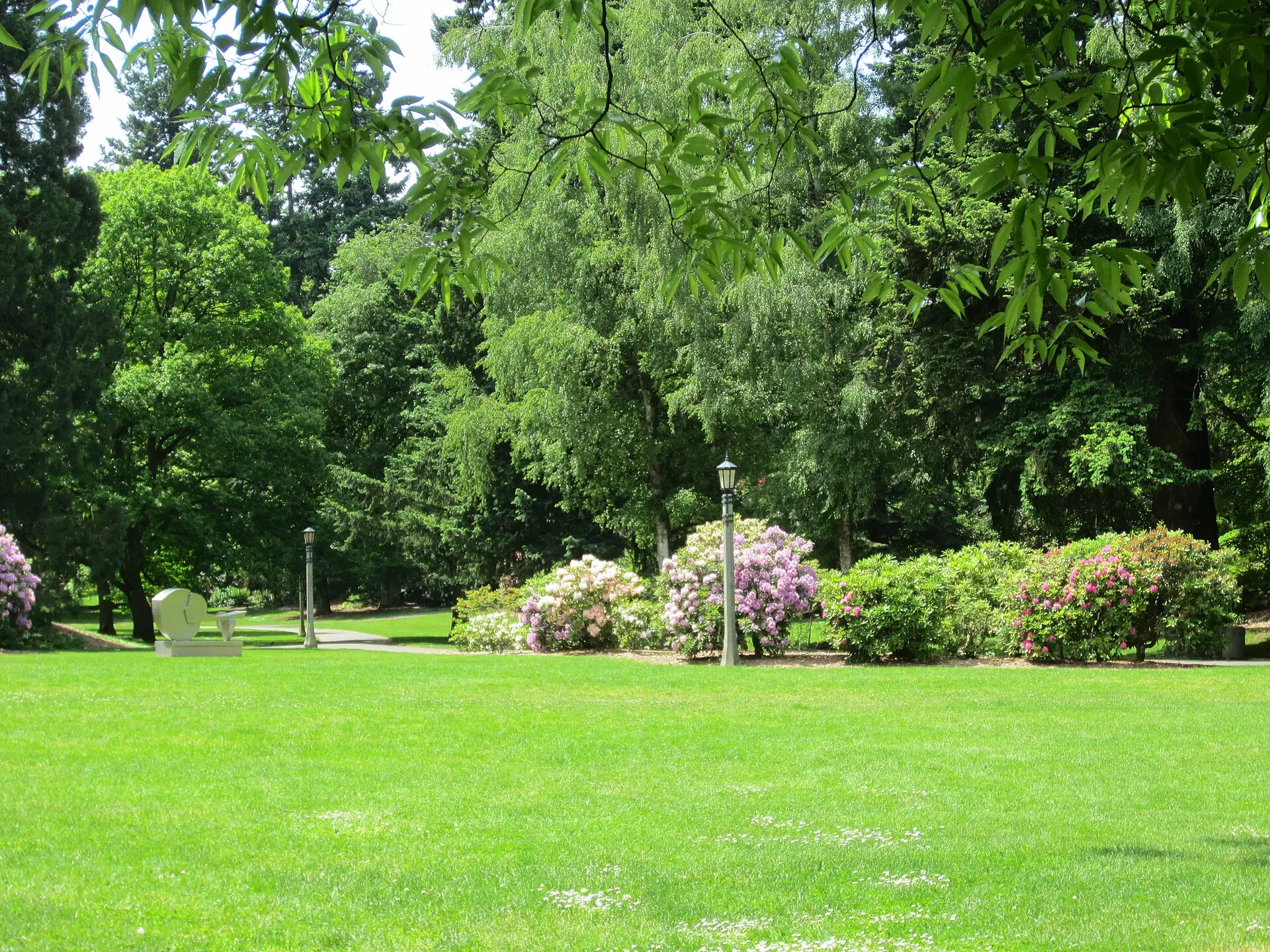
Identify several plants before choosing seed or treating a strange-looking patch. An older Northwest lawn is often a mixture, and its palest or coarsest grass may be a different species rather than a disease.
- Examine an unmown shoot, its collar and its base; color alone is unreliable.
- Look for both underground rhizomes and above-ground stolons.
- Use several traits together; mowing can remove tips and obscure auricles.
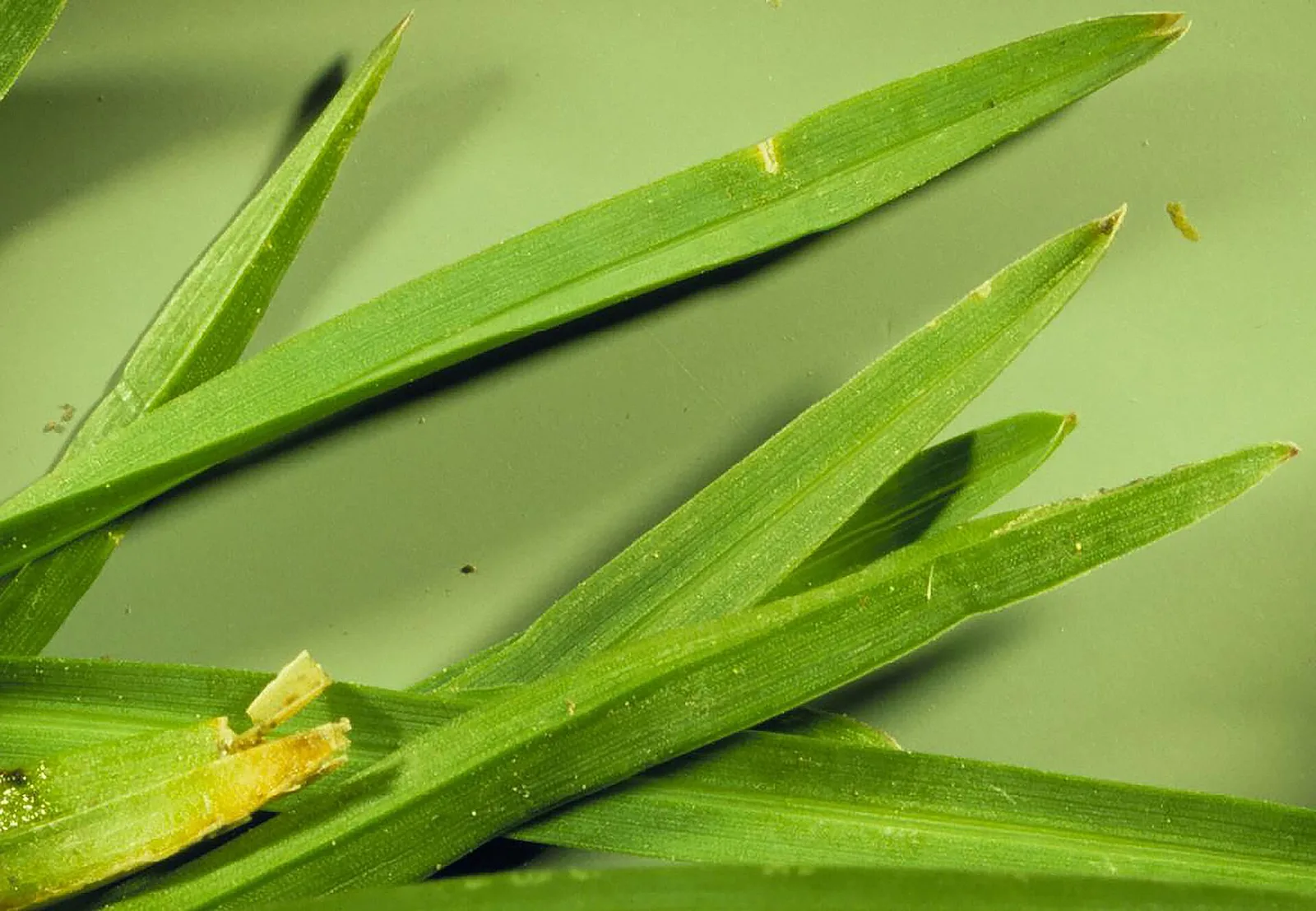
Collect a useful specimen
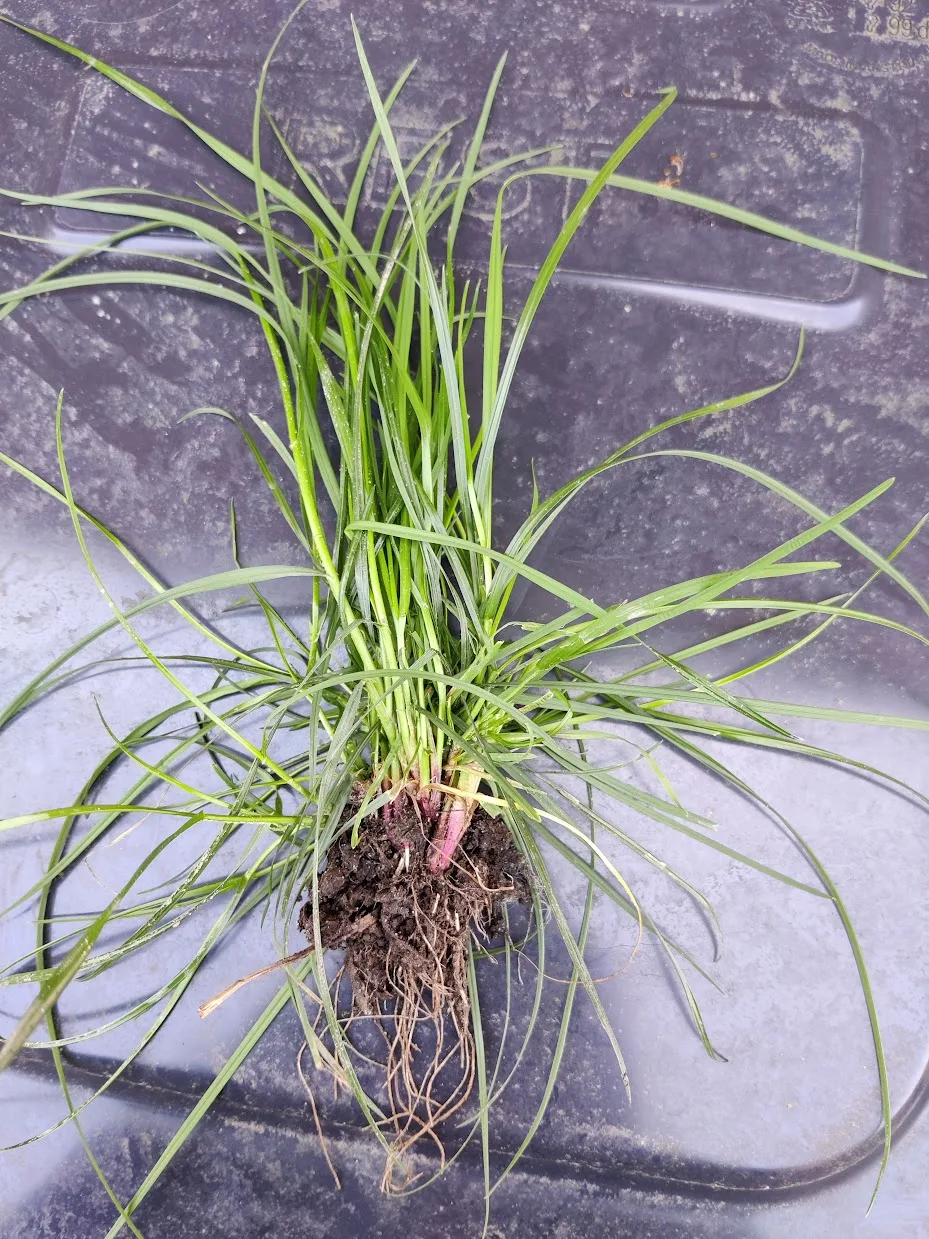
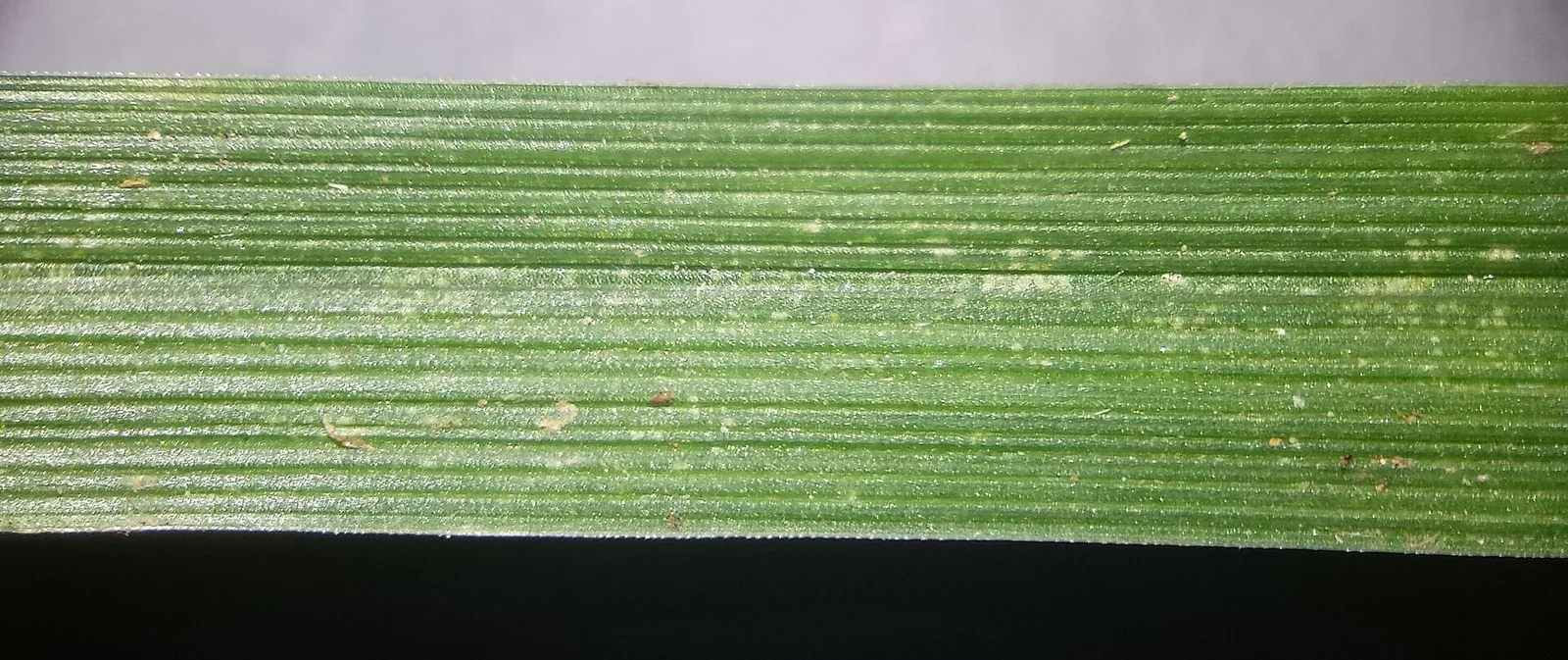
Choose a healthy shoot at the edge of a patch, with permission if the lawn is shared. Lift a small plug so any spreading stems remain attached. Put it beside a ruler and photograph the whole plant, upper and lower leaf surfaces, and the junction between blade and sheath. Let a small marked patch grow briefly if repeated mowing has removed every leaf tip.
The ligule is a small membrane or fringe inside that junction. Auricles are little projections at the sides. Vernation describes how a new leaf is packed inside the shoot: folded or rolled. A hand lens and a sharply focused phone photograph are more useful than guessing from a distant lawn picture.
Compare the whole set of clues
These are field clues, not a photographic identification guarantee. Modern cultivars and hybrid grasses can blur differences. In particular, a short-mown ryegrass may show very small auricles and a fine-leaved tall fescue may be narrower than expected.
| Grass | Useful leaf and collar clues | Growth clue |
|---|---|---|
| Perennial ryegrass | Folded new leaf; ridged top and notably glossy underside; short membranous ligule; auricles may be evident | Mainly bunch-forming |
| Tall fescue | Rolled new leaf; ridged, relatively broad blade with rough margins; short ligule; auricles variable | Distinct clumps; limited spread |
| Fine fescues | Very narrow folded blades, short membranous ligule and no auricles; use a species key within the group | Some bunch-forming, some spreading |
| Kentucky bluegrass | Folded leaf, boat-shaped tip, short ridge-like ligule and no auricles | Underground rhizomes |
| Annual bluegrass (Poa annua) | Folded leaves with boat-shaped tips, membranous slightly pointed ligule and no auricles; often frequent small seedheads | Variable, including persistent lawn biotypes |
| Creeping bentgrass | Rolled new shoots, pointed leaves, a relatively long ligule and no auricles | Above-ground runners root into a mat |
Use identification to make the next decision
Mark a suspect patch on a simple sketch. Compare it with the surrounding lawn during active growth and again after summer stress. A plant identification becomes useful when it explains why the patch grows differently, spreads sideways or leaves a gap.
Match replacement seed to the use and climate of the site. A mountain lawn, a windy coastal strip and a shaded western yard are different growing situations. If the sample still does not fit, send clear close-ups and a description of the site to your local Extension office before choosing a selective herbicide.
Questions that come up
Does every light-green patch mean Poa annua?
No. Light, nutrients, stress and several grass species can change color. Check leaf tips, the collar, growth habit and seedheads together.
Is fine fescue the same as tall fescue?
No. Fine fescues are a group of narrow-leaved grasses; tall fescue is a separate, usually broader-leaved lawn grass.
Sources & further reading
Independent guidance, with regional extension and primary references. The linked product label and local conditions take priority over a generic schedule.
- Perennial ryegrass: botanical characteristics and identificationOregon State University Turfgrass
- Tall fescueOregon State University Turfgrass
- The fine fescuesOregon State University Turfgrass
- Kentucky bluegrassOregon State University Turfgrass
- Annual bluegrassOregon State University Turfgrass
- Creeping bentgrassOregon State University Turfgrass
- Lawn problems and identifying Northwest lawn grassesOregon State University
- Fine fescue identificationPenn State Department of Plant Science
- Annual bluegrass identificationPenn State Department of Plant Science