A muddy path can reveal visitors you never see. Treat the first identification as a hypothesis: footprints stretch, overlap and melt, while several animals can use the same route.
- Photograph a ruler beside the print, then record several steps of the trail.
- Count toes and inspect the heel pad before relying on size.
- Tracks alone rarely prove that a large canine was a wolf.
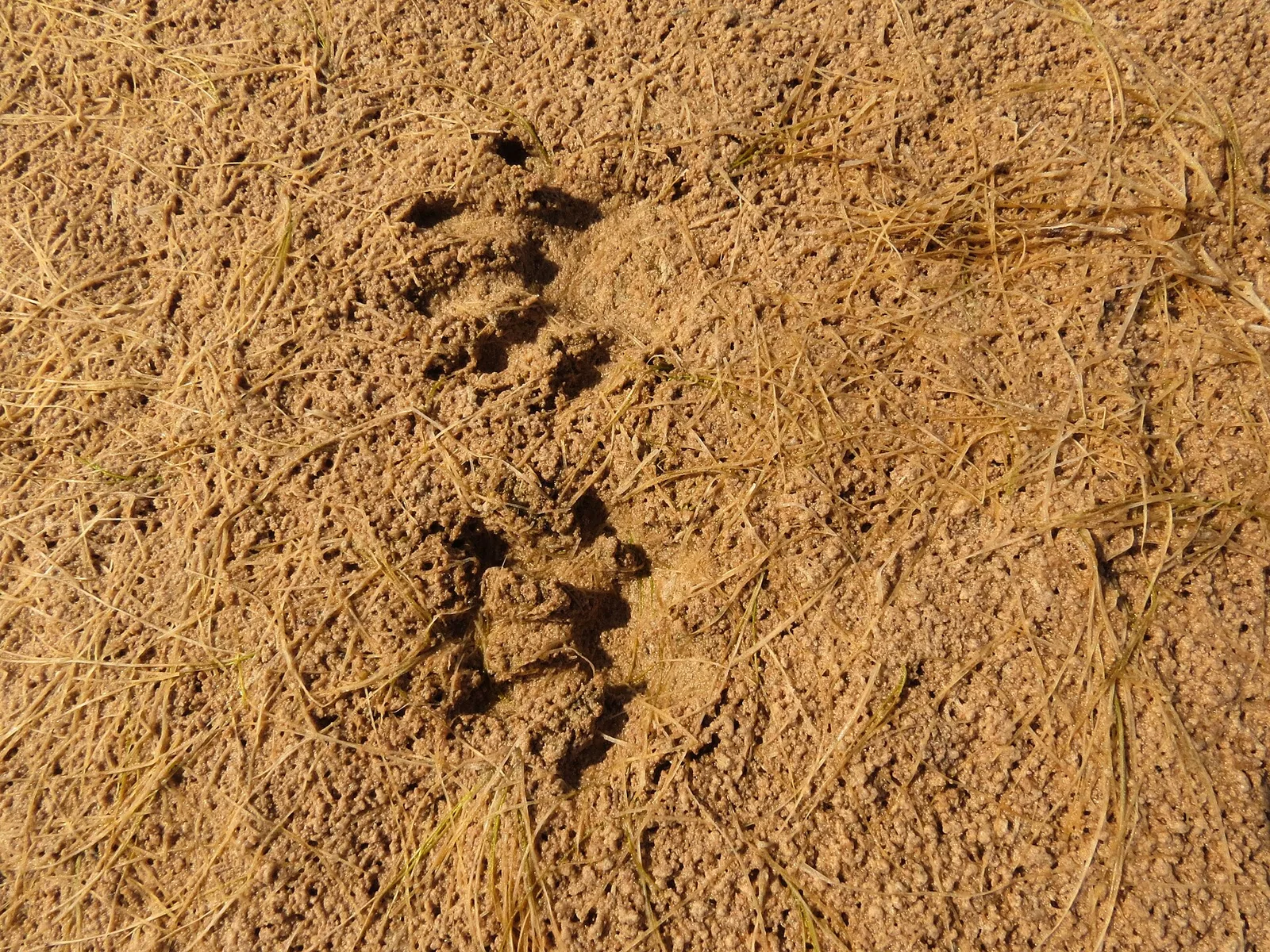
Make a record before it changes
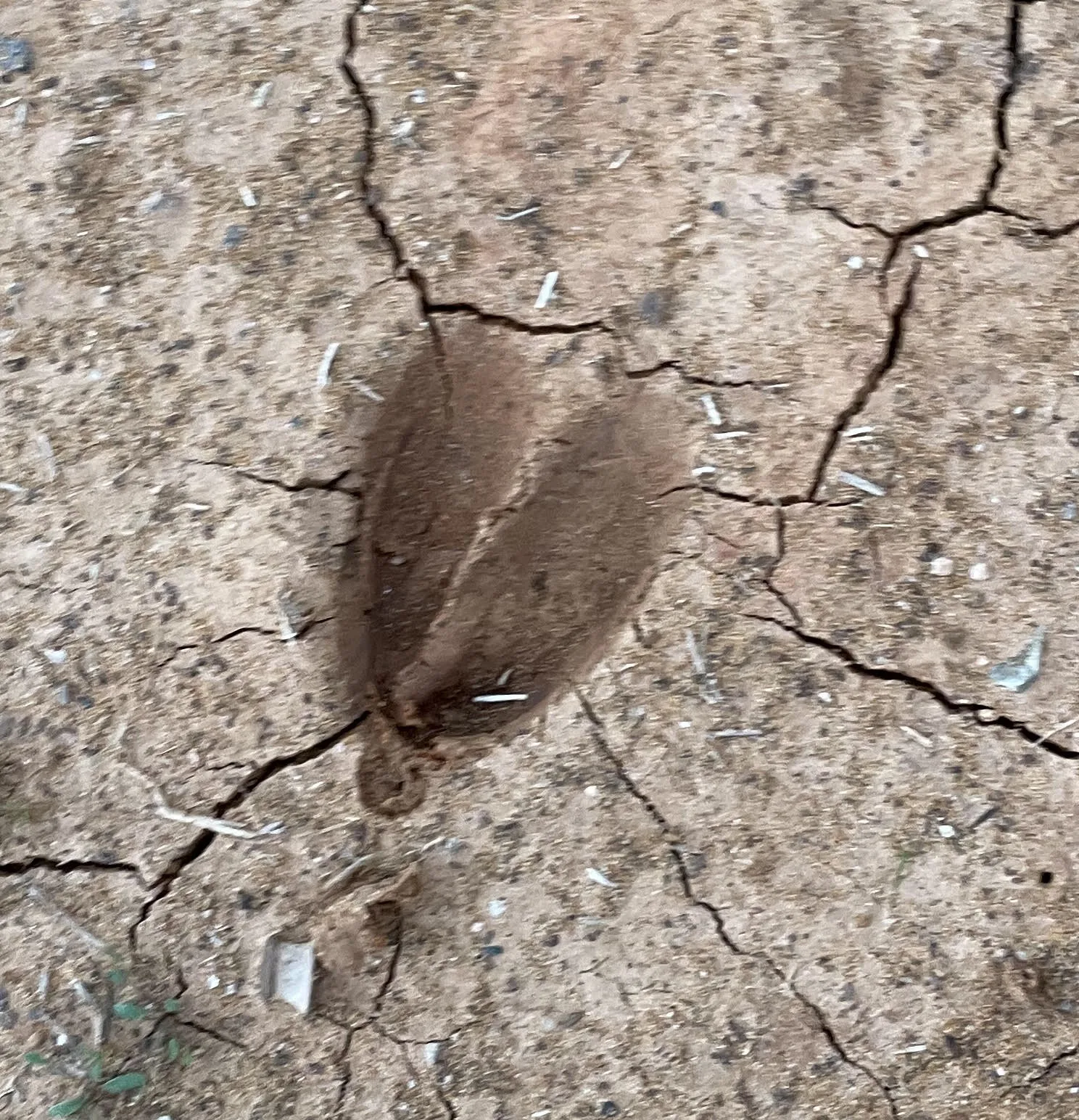
Take one photograph straight down, one with low-angle light and one showing the trail across the yard. Include the date, weather, surface and measured length and width. Keep your own footsteps away from the clearest impressions. A coin offers scale in a pinch, but a ruler is easier to interpret.
Check more than one footprint. The hind foot may land on the front impression, making a normal track look unusually large or misshapen. Loose mud spreads the toes; melting snow enlarges prints. Gait and spacing can be more informative than a single dramatic mark.
Match a group first
Use these broad groups to narrow a search, then compare with a regional guide.
| Group | Look for | Useful caution |
|---|---|---|
| Deer | Two main hoof halves, sometimes with smaller dewclaw impressions behind | Deep mud and running can spread the hooves |
| Dog or coyote | Four main toes, usually with claws; a canine-shaped central pad | Size and a straight path are clues, not proof of species |
| Cat or bobcat | Four toes and a relatively broad heel pad; claws often absent | Claws can register, so their presence does not settle the answer |
| Raccoon | Five long, finger-like toes; front and hind prints differ | A partly registered print may hide toes |
| Rabbit or squirrel | Repeated groups of bounding prints, with larger hind feet landing ahead | Inspect several groups to separate a gallop from overlapping prints |
| Bird | Slender toe impressions, commonly three forward toes | The rear toe and webbing may not register |
Use the surrounding story
A trail between trees, a narrow fence gap or fresh browsing can support an identification. Record those details without handling droppings or disturbing dens, nests or food caches. A camera on your own property can help confirm repeat visitors when aimed away from neighbors’ private spaces.
Coyote prints are often more compact and the travel line more purposeful than those of a wandering dog, but domestic dogs vary enormously. Keep an uncertain identification uncertain. If a wildlife agency needs a report, send the full sequence and measurements rather than only your conclusion.
Turn curiosity into better coexistence
Keep pet food and fallen food waste from becoming an invitation. Secure rubbish, keep dogs supervised and do not approach wildlife to get a better photograph. Where damage is recurring, identify the animal and entry route before choosing an exclusion method.
A new visitor does not automatically require trapping or removal. Local wildlife agencies and Extension can help distinguish a passing animal from a conflict that needs attention, including how to avoid blocking animals inside a structure.
Questions that come up
How big should a coyote track be?
Size varies with the animal, gait and substrate. Measure several prints and compare their pads, toes and trail pattern with a regional reference instead of applying a single size cutoff.
Do cat tracks never show claws?
Claw impressions are often absent, but they can appear. Use the whole print and trail.
Sources & further reading
Independent guidance, with regional extension and primary references. The linked product label and local conditions take priority over a generic schedule.
- Carnivore tracking in Washington’s national parksNational Park Service
- Coyote tracks and signsNational Park Service
- Animal track matchingNational Park Service
- Raccoon: tracks and signsWashington Department of Fish and Wildlife
- Living with wildlife: rabbitsWashington Department of Fish and Wildlife
- Living with wildlife: tree squirrelsWashington Department of Fish and Wildlife
- Manage wildlife conflicts in your home and gardenOregon State University Extension