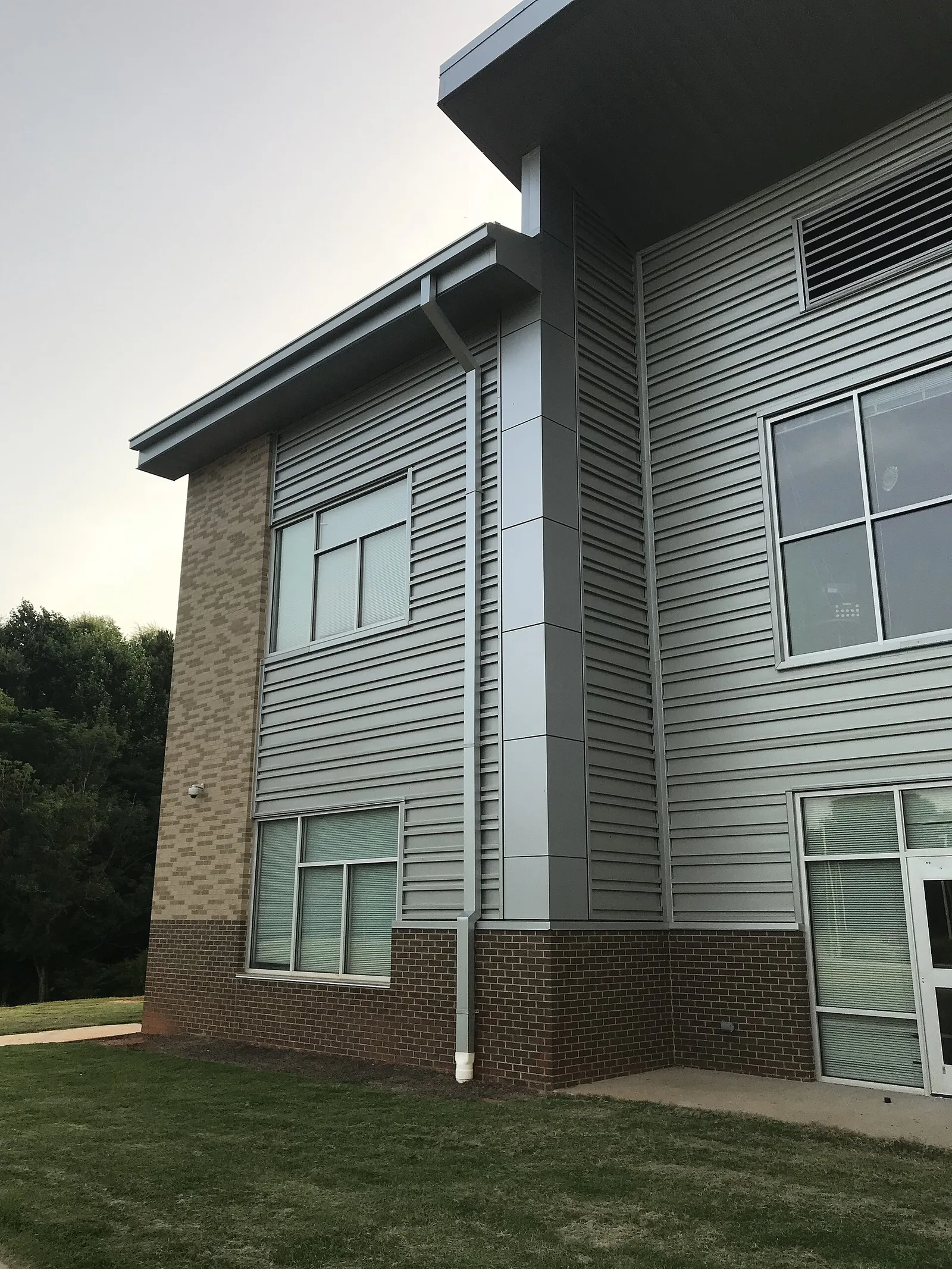
The useful question is not whether the gutter looks clean. It is whether roof water reaches an approved drainage point without spilling over the house or returning to the foundation. Inspect the complete route before replacing one visible part.
- A clean gutter still needs a working downspout and outlet.
- Observe overflow during rain, then schedule safe cleaning.
- Keep existing drainage connections until a qualified person checks the system.
Map the system before changing it
Draw a rough roof outline and mark each downspout. Follow each pipe as far as you can see: a surface extension, a rain garden, a drywell connection or another underground system. Record where the route disappears. That missing section may matter more than a new gutter guard. Take a photograph before moving any removable piece.
Use symptoms to narrow the job
Choose a sheltered observation point during a normal shower. A note about where the first overflow begins is useful to a gutter cleaner or drainage contractor.
| What you see | What to investigate |
|---|---|
| Water spilling at one corner | Leaf buildup, gutter slope or a blocked elbow |
| Water running behind the gutter | Attachment, roof edge and flashing |
| Water backing up at ground level | Outlet or underground drainage restriction |
| Erosion beneath the outlet | Discharge location and splash protection |
Choose access before tools
Ground-access observations and collecting fallen debris are sensible homeowner jobs. High gutters, awkward ground, power lines and wet roofs change the task. Hire appropriate help rather than stretching sideways from a ladder. A telescoping attachment is not a reason to work near overhead wires or spray into roof assemblies. Keep children and pets away from the work area.
Treat guards as a maintenance choice
Tree cover, roof geometry and the type of debris determine what collects. Fine needles and seed pods behave differently from large leaves. Before buying guards, ask how the proposed system will be cleaned, whether it fits the roofing and what access will cost. Photograph the present overflow so the proposed improvement can be checked later.
Keep the outlet legal and effective
DOE describes directing roof water away from foundations; local requirements and soil conditions determine the approved destination. Portland’s stormwater guidance also stresses maintaining extensions and connected systems. Do not disconnect a buried pipe, bore a new outlet or send water toward a slope, neighboring property or sidewalk without checking the site and local rules. Reinspect after the next substantial rain.
Questions that come up
How often should gutters be cleaned?
Portland recommends at least twice a year, with more checks where trees shed heavily. Use actual leaf and needle buildup to adjust the schedule.
Will a longer extension solve a wet basement?
It may address one roof-water problem, but groundwater, grading, plumbing leaks and failed drains can produce similar symptoms. Check the complete route and the pattern of wetness first.
Sources & further reading
Independent guidance, with regional extension and primary references. The linked product label and local conditions take priority over a generic schedule.
- Stormwater Gutters DownspoutsU.S. Department of Energy
- Maintaining Home Stormwater SystemsPortland Environmental Services
- How to care for a rain garden or other stormwater facilityPortland Environmental Services